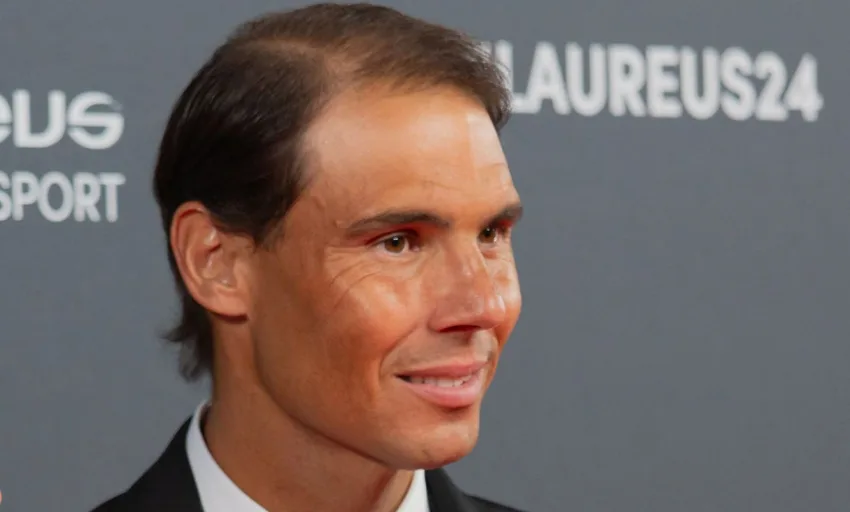
One man is the greatest clay-court player tennis has ever seen. The other runs the biggest bank in America. Put side by side, Rafael Nadal and Jamie Dimon show how differently the world’s top earners turn talent into wealth, and how wide the gap between sports money and Wall Street money really is.
Rafael Nadal retired from professional tennis in November 2024 with 22 Grand Slam singles titles and $134,946,100 in official career prize money. Jamie Dimon, twenty years into his run at JPMorgan Chase, sits on a fortune measured in billions. This comparison breaks down both men’s net worth, names the sources behind the estimates, and explains how each of them built his money.
Updated November 2026
Biography and Quick Facts
The two men were born thirty years apart and built their careers on opposite sides of the Atlantic. Nadal turned professional as a teenager in Mallorca and spent two decades at the top of tennis. Dimon climbed the ladder of American finance, survived being fired at 42, and ended up running the most powerful bank in the United States.
Rafael Nadal Quick Facts
| Detail | Information |
|---|---|
| Full Name | Rafael Nadal Parera |
| Date of Birth | June 3, 1986 |
| Age | 40 |
| Birthplace | Manacor, Mallorca, Spain |
| Nationality | Spanish |
| Profession | Former professional tennis player |
| Known For | 22 Grand Slam singles titles, including a record 14 French Open titles |
| Career Prize Money | $134,946,100 (official ATP figure) |
| Spouse | María Francisca “Mery” Perelló (married 2019) |
| Children | 2 sons |
| Net Worth | $220 million – $400 million (2026 estimates) |
Jamie Dimon Quick Facts
| Detail | Information |
|---|---|
| Full Name | James Dimon |
| Date of Birth | March 13, 1956 |
| Age | 70 |
| Birthplace | New York City, New York, USA |
| Nationality | American |
| Profession | Chairman and CEO of JPMorgan Chase |
| Education | Tufts University; Harvard Business School (MBA) |
| Known For | Leading JPMorgan Chase since 2006, including through the 2008 financial crisis |
| Spouse | Judith Kent (married 1983) |
| Main Asset | Around 6 million shares of JPMorgan Chase stock |
| Net Worth | $2.8 billion – $3.2 billion (2026 estimates) |
Rafael Nadal and Jamie Dimon Net Worth: The Head-to-Head Numbers
The headline answer is not close. Forbes estimated Jamie Dimon’s net worth at about $3.1 billion in late October 2026, and its real-time billionaire tracker put him at roughly $3.2 billion during the year. Rafael Nadal’s highest current estimates reach $400 million. Measured at the top of both ranges, the Rafael Nadal and Jamie Dimon gap is about $2.8 billion, which means Dimon is worth roughly eight times as much as one of the most successful tennis players in history.
| Detail | Rafael Nadal | Jamie Dimon |
|---|---|---|
| Net Worth (2026 estimates) | $220 million – $400 million | $2.8 billion – $3.2 billion |
| Main Source of Wealth | Prize money, endorsements and businesses | JPMorgan Chase salary and stock |
| Career Highlight | 22 Grand Slam singles titles | CEO of the largest bank in the US since 2006 |
| Signature Asset | Aspemir investment holding company | Around 6 million JPMorgan Chase shares |
| Status in 2026 | Retired (November 2024) | Active chairman and CEO |
| Age | 40 | 70 |
The comparison is not really about who worked harder or earned more per year. Nadal was, at his peak, one of the highest-paid athletes on the planet, and Forbes calculated that he earned more than $550 million before tax across his career. Dimon simply plays in a bigger financial league: he takes a share, through stock, of a bank that earned more than $57 billion in profit in 2025 alone. A small slice of a giant institution beats even a giant slice of a tennis career.
The everyday numbers underline the point. Dimon’s pay package for 2025 alone, about $43 million, equals nearly a third of everything Nadal won in prize money across a twenty-year career. And while Nadal’s fortune now grows steadily through his companies, Dimon’s can rise or fall by a Nadal-sized amount in a single strong or weak quarter for bank stocks.
Rafael Nadal Net Worth: The Fortune Behind the King of Clay
Nadal’s net worth is estimated at between $220 million and $400 million in 2026, and the wide range tells its own story. Fortune was still citing $220 million in mid-2026, a figure that had been repeated for years. Celebrity Net Worth then updated its estimate to $400 million in 2026, and Forbes Spain’s rich list, published on November 3, 2026, estimated his fortune at €400 million. On the Rafael Nadal and Jamie Dimon scorecard, Nadal’s number is the one that moved the most this year.
The strongest evidence sits in Spain’s corporate records. Aspemir, Nadal’s investment holding company, ended 2024 with net equity of €375.4 million, roughly $428 million, according to its filed accounts. That does not mean Nadal holds that much in personal cash, but it shows his business empire alone is valued in the same range as the higher net worth estimates.
Prize Money and Career Earnings
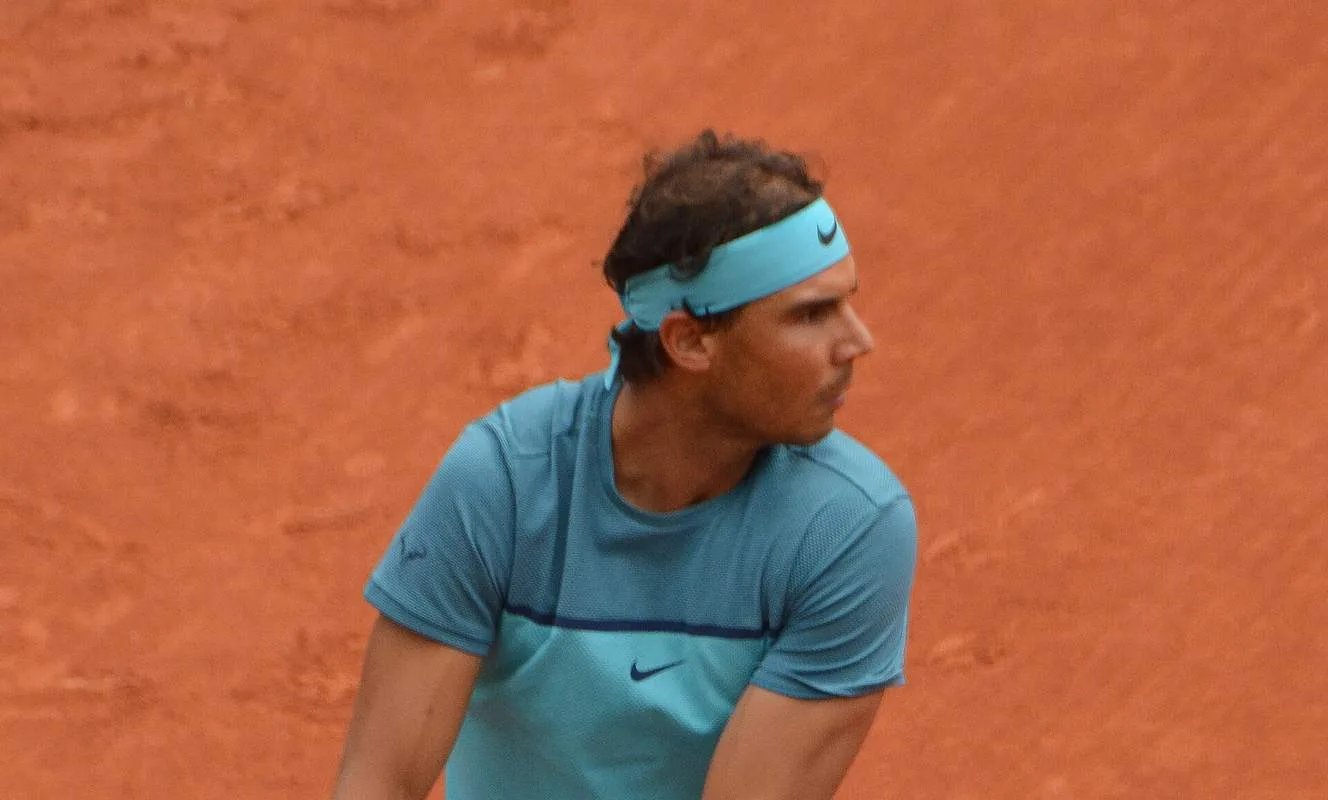
On court, Nadal earned $134,946,100 in official ATP prize money, one of the highest totals in tennis history. He won 92 career singles titles, including 22 Grand Slams and a record 14 French Open crowns at Roland Garros, a haul that made him the King of Clay. He also won two Olympic gold medals, in singles at Beijing 2008 and in doubles at Rio 2016, and helped Spain win the Davis Cup five times. His rivalry with Roger Federer and Novak Djokovic defined men’s tennis for nearly twenty years.
Prize money, though, was never the biggest part of his income. Forbes estimated at his retirement in November 2024 that Nadal had earned more than $550 million before tax over his career, with endorsements, appearance fees and business income contributing over $415 million of that total. In his final seasons he was still earning more than $20 million a year away from the court.
Endorsements and Business Ventures
Nadal’s sponsor list stayed remarkably stable for two decades. Nike dressed him from his teens, Kia made him a global ambassador in 2006, and he also carried long-running deals with Babolat and luxury watchmaker Richard Mille, whose tourbillon watches he wore during matches. That loyalty made him one of the most trusted faces in sports marketing.
His bigger achievement was converting fame into businesses while he was still playing. The Rafa Nadal Academy opened in Manacor in 2016 and has grown into an international network of tennis centers. He co-founded the ZEL hotel brand with Meliá Hotels International, holds real estate and investment interests through Aspemir, and runs the Rafa Nadal Foundation with his wife Mery, who serves as its director. Retirement ended his prize money, but not his income.
Life After Retirement
Nadal played his final professional matches at the Davis Cup Finals in Málaga in November 2024, closing his career in front of a home crowd. In 2025, Roland Garros honored him with an emotional farewell ceremony and left a permanent mark of his footprint on Court Philippe-Chatrier, the court where he won 14 titles. Since then he has focused on his academy, his businesses and family life in Mallorca with Mery and their two young sons. Unlike many retired stars, he does not need exhibitions or comeback tours to protect his fortune: the companies inside Aspemir now do the earning for him.
Jamie Dimon Net Worth: The Banker Who Became a Billionaire on a Salary
Dimon’s net worth is estimated at between $2.8 billion and $3.2 billion in 2026. Forbes put him at $3.1 billion on October 30, 2026, and around $2.8 billion earlier in the year, with the figure moving as JPMorgan’s share price moves. In the Rafael Nadal and Jamie Dimon pairing, Dimon is corporate America’s great outlier: a hired executive, not a founder, who became a billionaire almost entirely through pay and stock at one company.
Bloomberg first counted Dimon as a billionaire in June 2015, at about $1.1 billion. Since then his fortune has roughly tripled, powered by a share price that has climbed from around $40 when he took over JPMorgan to well above $300 in 2026.
Fired at Citigroup, Rebuilt at Bank One
Dimon’s path to the top job was not smooth. He rose through American Express and Travelers Group under his mentor Sandy Weill, helping build what became Citigroup. Then, in 1998, he was pushed out of Citigroup at age 42 after a falling-out with Weill.
Two years later he took over Bank One, a struggling Chicago bank, and personally invested $60 million of his own money in its stock. He cut costs, fixed its balance sheet and raised its value until JPMorgan Chase acquired Bank One in 2004. Dimon became JPMorgan’s chief executive in 2006 and chairman in 2007, and he steered the bank through the 2008 financial crisis in better shape than any of its big rivals, buying Bear Stearns and Washington Mutual’s banking operations along the way.
Salary, Stock and Options
Dimon’s annual pay is large but explains only part of the fortune. JPMorgan paid him $39 million for 2024 and about $43 million for 2025, most of it in performance-linked stock rather than cash. His base salary is just $1.5 million; the rest rides on the bank’s results.
The real engine is ownership. Public filings show Dimon holds around 6 million JPMorgan shares, worth roughly $2.1 billion at late-2026 prices, plus a 2021 grant of 1.5 million stock options that became exercisable in July 2026 and was worth around $300 million before tax. Because so much of his wealth is one stock, his net worth swings with it: a 10 percent move in JPMorgan shares changes his fortune by roughly $250 million.
The Succession Question
The one open question over Dimon’s fortune is how much longer he stays. He has run JPMorgan for twenty years, through the financial crisis, a major trading loss in 2012 and the bank’s record-breaking recent results, including a $21.2 billion quarterly profit in 2026, the largest ever reported by an American bank. Dimon has said his retirement is a matter of a few years rather than a decade, and the bank keeps a bench of senior executives ready to succeed him. Whenever he steps down, he leaves as an employee with a very large shareholding, not as an owner handing over control, and his personal fortune will keep rising and falling with the stock long after his last day in the job.
Two Fortunes, Two Playbooks
The interesting part of Rafael Nadal and Jamie Dimon is not the size of the gap but how differently the two fortunes were assembled. Nadal earned his money in public, match by match, in a career with a hard expiry date. Every dollar started as prize money, a sponsor’s cheque or a business he launched while still playing, and he had to build his post-career income before his body gave out.
Dimon did the opposite. He never founded the company that made him rich. Instead, he spent twenty years collecting salary, bonuses and stock inside JPMorgan Chase, letting one rising share price do the compounding. Founder-billionaires like James Packer built fortunes by owning a company from the start; Dimon reached the same tier as an employee, which almost never happens in modern business.
Their risk looks different too. Nadal’s wealth sits in private Spanish companies, hotels, real estate and his academy, so it is diversified but hard to value precisely. Dimon’s wealth is transparent to the dollar on any trading day, but concentrated in a single stock. And the timelines are mirror images: Nadal had earned most of his money by 40, while Dimon’s fortune only passed $1 billion when he was nearly 60. That is the real lesson of Rafael Nadal and Jamie Dimon: the athlete’s window is short and spectacular, the banker’s is long and compounding.
Why the Estimates Differ
Neither man publishes a personal balance sheet, so every figure here is an estimate, and the estimates move for different reasons. For Nadal, the older $220 million figure comes from a period when trackers counted mainly prize money and endorsements. The jump toward $400 million followed Spanish reporting on Aspemir’s filed accounts, which revealed how large his business holdings had become. Converting euros to dollars also shifts the Forbes Spain number from month to month.
For Dimon, the moving part is JPMorgan’s share price. Forbes and other trackers count his shares, and some include his stock options while others do not, which is why his estimated wealth can read $2.8 billion in one month and $3.2 billion in another without him earning or spending anything in between. Any single figure for Rafael Nadal and Jamie Dimon should be read as a dated snapshot, not a bank statement.
The ranges used in this article are deliberately honest ones. Nadal’s spans the cautious older estimates and the newer, filing-backed reporting from Spain, while Dimon’s spans Forbes’ readings across 2026. Where the sources disagree, the range shows the disagreement instead of hiding it behind one confident number.
Frequently Asked Questions
1. Who is richer, Rafael Nadal or Jamie Dimon?
Jamie Dimon is far richer: his estimated $2.8 billion to $3.2 billion is roughly eight times Rafael Nadal’s $220 million to $400 million.
2. What is Rafael Nadal’s net worth in 2026?
Estimates range from $220 million, the figure Fortune cited in 2026, up to $400 million, the updated estimate from Celebrity Net Worth and Forbes Spain.
3. What is Jamie Dimon’s net worth in 2026?
Forbes estimated Jamie Dimon’s net worth at about $3.1 billion in October 2026, within a 2026 range of roughly $2.8 billion to $3.2 billion.
4. How did Jamie Dimon become a billionaire without founding a company?
He spent twenty years at JPMorgan Chase taking most of his pay in stock, building a holding of around 6 million shares worth roughly $2.1 billion.
5. What is the combined net worth of Rafael Nadal and Jamie Dimon?
Together, the pair are worth an estimated $3 billion to $3.6 billion, with Dimon accounting for the large majority of the total.
Final Thoughts
Rafael Nadal and Jamie Dimon never competed for the same prize, yet their fortunes frame the two extremes of modern earning power. Nadal leaves tennis with one of the largest fortunes in his sport’s history, built on $134.9 million in prize money, loyal blue-chip sponsors and businesses that will keep earning long after his retirement.
Dimon’s story has no real parallel in corporate life: a salaried banker, fired at 42, who rebuilt his career and rode two decades of stock-based pay to a fortune above $3 billion. Tennis made Nadal rich by any normal standard. Wall Street, given enough time and enough shares, operates on a completely different scale.
You may also like: Fernando González Net Worth
You may also read about our latest article: Cory Chase Husband Net Worth

1 thought on “Rafael Nadal and Jamie Dimon Net Worth: Tennis Royalty vs Wall Street’s Richest Banker”