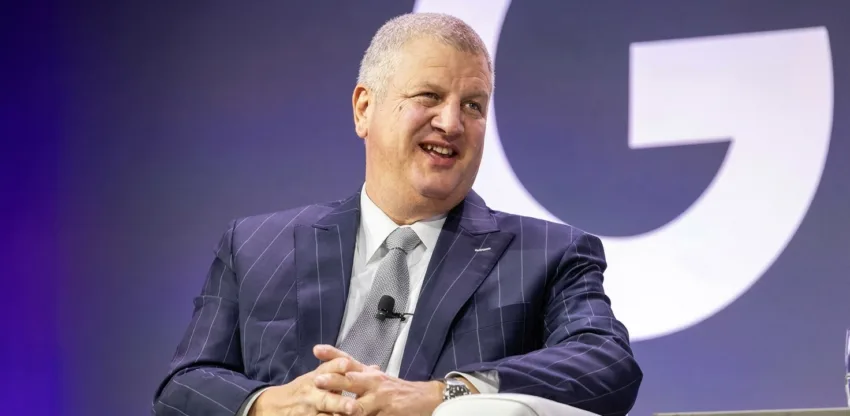
Derek Stevens is the Detroit-born businessman who bet on downtown Las Vegas when almost everyone else had written it off, and Derek Stevens net worth in 2026 shows how completely that bet paid off. As the owner of Circa Resort & Casino, The D Las Vegas and the Golden Gate Hotel & Casino, he has become the most visible independent casino owner left in the city.
The honest answer on his fortune is a range, not a single figure. Forbes estimated his wealth at about $1.2 billion in January 2026, while the tracking site WealthRank has since put the number closer to $1.25 billion to $1.3 billion. Because every one of his companies is privately held, no exact figure exists in public, and any site that prints one precise number is guessing.
This guide to Derek Stevens net worth, updated November 2026, pulls together what the published estimates actually say, where the money came from, and why the numbers move around so much. The short version is simple: a Michigan auto parts company gave him his start, three downtown casinos made him rich, and one enormous sportsbook turned him into a national name.
Biography and Quick Facts
Stevens was born in Detroit and raised in Grosse Pointe, Michigan, in a family that built things. His father John was an architect, his mother Betty taught high school math and physics, and his grandfather Rene DeSeranno founded the auto parts maker Cold Heading Company back in 1952. Stevens still runs that company today, alongside the casinos that made him famous.
| Detail | Information |
|---|---|
| Full Name | Derek Stevens |
| Date of Birth | September 17, 1967 |
| Age | 59 years old (in 2026) |
| Birthplace | Detroit, Michigan, USA |
| Nationality | American |
| Education | University of Michigan; MBA in Finance, Wayne State University |
| Profession | Businessman and Casino Owner |
| Known For | Owner of Circa Resort & Casino, The D Las Vegas and Golden Gate Hotel & Casino |
| Companies | Circa Hospitality Group, Circa Sports, Cold Heading Company |
| Spouse | Nicole Parthum |
| Children | 3 |
| Net Worth | $1.2 billion – $1.3 billion (estimated) |
Derek Stevens Net Worth in 2026
So what is Derek Stevens net worth in 2026, in plain terms? The most credible published estimate comes from Forbes, which profiled him in January 2026 as the last of the independent Las Vegas casino moguls and put his fortune at about $1.2 billion. WealthRank, which tracks billionaire wealth daily, listed him at roughly $1.25 billion in November 2026, with some of its pages rounding the figure up to $1.3 billion.
That makes the fairest published range for Derek Stevens net worth $1.2 billion to $1.3 billion. Older estimates printed before the Forbes profile were far lower, often between $600 million and $800 million, because valuers could only guess at what three private casinos and a growing sportsbook were worth. The Forbes number carried more weight because it was built on a closer look at his properties and what they actually earn.
Private fortunes are always the hardest to pin down. Unlike a stock market figure such as Steve Cohen, whose wealth sits in funds and assets that outsiders can partly track, Stevens owns solid buildings on Fremont Street. Their value depends on gaming revenue, real estate prices and debt, and none of those numbers has to be published.
Why the Estimates Differ
Estimates differ for three main reasons. First, his companies are private, so there are no public filings to copy numbers from. Second, casino real estate swings with the Las Vegas market, and downtown property values have climbed sharply since Circa opened. Third, the brothers put about $500 million of their own money into building Circa, according to Forbes, so any honest valuation has to weigh that spending and the finished asset against each other.
Forbes has also estimated that Circa alone takes in about $280 million a year in gambling revenue, roughly 35 percent of all downtown gaming revenue. Numbers like that explain why the billionaire estimates replaced the older millionaire ones so quickly. Until Stevens sells a property or takes a company public, though, the range is the truth and the single figures are marketing.
From Detroit Auto Parts to Las Vegas
Stevens did not start in casinos. His first job was parking cars as a valet along the Detroit River, and in 1993 he took over Cold Heading Company, the family business his grandfather had started in Warren, Michigan, in 1952. The company makes nuts, bolts and fasteners for car makers, and under Stevens it grew beyond Michigan, adding a plant in Indiana in 1998 and later expanding into Ohio.
Cold Heading Company: The Family Business
Cold Heading is the quiet foundation under everything else. It gave Stevens three decades of practice at running a real business with tight margins, and it produced the cash and the borrowing power he later carried into Las Vegas. He remains its chief executive today, which makes him a genuine rarity: a man who runs a Midwestern factory business and a Las Vegas casino group at the same time.
First Steps Into Gaming
His route into gaming started on the stock market, not the casino floor. During the 1990s he bought shares in gaming companies such as International Game Technology and the Rio, and in the 2000s he built a stake of more than one million shares in Riviera Holdings, owner of the Riviera on the Las Vegas Strip, through his company Desert Rock Enterprises. He had first visited Las Vegas in the late 1980s and kept coming back for sporting events and conventions, studying the business as a customer long before he owned any of it.
Sports pulled him deeper in. In 2008 he bought the Las Vegas 51s, the city’s minor league baseball team, and owned it until 2013. The team taught him the local market and introduced him around town, and it confirmed the lesson he had already taken from downtown land prices: the future he could afford was on Fremont Street, not the Strip.
Building a Downtown Casino Empire
Downtown Las Vegas was the unfashionable end of the city in the 2000s, overshadowed by the Strip and short on new investment. Stevens saw cheaper buildings, loyal local customers and room to grow. With his younger brother Greg, an engineer who handles the technical side while Derek fronts the business, he started buying.
Golden Gate: The First Casino
The brothers became co-owners of the Golden Gate Hotel and Casino in 2008, taking a 50 percent stake in the oldest hotel in Las Vegas, which opened in 1906 at 1 Fremont Street. Getting a gaming license took Stevens about 18 months, and the Great Recession hit just as they entered the industry. The downturn hurt, but it also cut land prices across downtown, and the brothers kept buying while others retreated. They went on to take full ownership of the Golden Gate in 2015. The property is a piece of living history: it housed the city’s first telephone in 1907 and, from 1959, served the famous shrimp cocktail that became a downtown ritual for generations of visitors.
The D Las Vegas and the Events Center
In 2011 the brothers bought Fitzgeralds, a tired downtown casino hotel, and relaunched it in 2012 as The D Las Vegas. The name nods to Derek’s nickname, to Detroit and to downtown, and the relaunch leaned into value pricing and a louder, younger energy than the old property had. The D worked, and it proved the brothers could not just buy casinos but fix them.
Two years later Stevens bought the old Clark County Courthouse site nearby and turned it into the Downtown Las Vegas Events Center, an open-air venue that opened in 2014 and hosts concerts and watch parties. In the same year, his properties became the first in Las Vegas to accept bitcoin for hotel and restaurant purchases. Each move pulled more visitors toward the west end of Fremont Street, exactly where his buildings stood. Moves like these, steady and compounding, are the real story behind Derek Stevens net worth long before the billion-dollar headlines arrived.
Circa Resort & Casino: The Billion-Dollar Bet
The defining move came in 2015 and 2016, when the brothers bought the Las Vegas Club, the Mermaids Casino and the Glitter Gulch club, demolished all three, and built something downtown had not seen in 40 years. Circa Resort & Casino opened on October 28, 2020, in the middle of a pandemic, as the first ground-up resort built downtown since 1980. It was a project reported to cost about $1 billion, financed privately by the brothers and their lenders.
Circa was built around sports. It holds what the company calls the world’s largest sportsbook, a three-story betting theater built around a giant screen, and Stadium Swim, a rooftop pool amphitheater with six pools facing a 143-foot screen. The resort is adults only, 21 and over, and its 777-room hotel tower made it the tallest building downtown. Circa did not just add a casino; it changed what downtown Las Vegas was for, and it is the single asset that pushed Derek Stevens net worth into billionaire territory.
The rest of the resort followed the same bigger-is-better logic. Its parking structure, nicknamed Garage Mahal, was designed with ride-share hubs before a single slot machine was placed, the restored Vegas Vickie neon cowgirl now hangs over the lobby bar, and the Legacy Club rooftop lounge honors the pioneer casino owners of old Las Vegas. It is a club Stevens now belongs to by any measure, and he built the room himself.
Circa Sports and the Bettor Behind the Brand
Stevens launched Circa Sports in 2019, opening its first sportsbook at the Golden Gate before making Circa itself the flagship. The brand built its name on taking big bets, posting sharp lines and welcoming winning players instead of banning them, and it has since expanded beyond Nevada into other states, including Colorado. For a sportsbook business, the owner’s own betting is the loudest advertising there is.
Stevens bets publicly and heavily, usually on his Michigan teams. In 2015 he stood to win $1 million on a Michigan State basketball bet, in 2017 he wagered $352,000 on the first round of the NCAA Tournament alone, and in 2018 he watched a potential $1 million payout slip away when Michigan lost the national title game. Win or lose, every ticket becomes a headline, and every headline markets the sportsbook for free. He also gave away 1,700 free flights to Las Vegas in May 2020 to pull visitors back during the pandemic shutdown.
That showmanship is a business asset, not a hobby. Anyone tracking Derek Stevens net worth closely can see what the betting profile does: it feeds the Circa Sports brand, fills the sportsbook on fight nights and game days, and keeps his name in the sports pages all year round. Few casino owners anywhere market themselves this effectively, or this cheaply.
How Derek Stevens Makes His Money
His income rests on four legs. The first is casino revenue from three downtown properties, with Circa the clear giant of the group. The second is hotel, food, drink and entertainment spending at those same resorts, including the Events Center. The third is Circa Sports, which earns the house share on a growing betting handle in Nevada and beyond. The fourth is the oldest of all: Cold Heading Company, still selling fasteners to the auto industry from Michigan.
Real estate quietly underpins the whole structure. The brothers bought downtown land and buildings when prices were low, and every improvement they made raised the value of the parcels around them, most of which they also owned. It is the oldest play in the Las Vegas book, run patiently over two decades. Understanding that structure matters more than any single headline figure, because Derek Stevens net worth rises and falls with downtown itself.
Recognition has followed the money. Forbes called him the last of the independent Las Vegas casino moguls, and in 2026 the University of South Carolina’s College of Hospitality, Retail and Sport Management gave him its Visionary Innovation and Leadership Award. In an industry now run by giant public corporations, he and his brother remain that rare thing: owners who answer to no shareholders.
Personal Life and Family
Stevens is married to Nicole Parthum, whom he met back in first grade, and the couple have three children. The family lived for years in Birmingham, Michigan, while making constant trips to Las Vegas, and Stevens still splits his identity between the two cities. Detroit runs through his branding, from The D’s name to the Michigan teams he backs every March.
His brother Greg is his partner in every casino venture but keeps a low profile, preferring the engineering and construction side of the projects. Derek is the opposite: he walks his casino floors, talks to guests and dealers, and poses for photos, an old-school habit that regulars at the Golden Gate still talk about. People who have worked for him describe a hands-on owner in a city of absentee corporations.
Frequently Asked Questions
1. What is Derek Stevens’ net worth in 2026?
Derek Stevens’ net worth in 2026 is estimated at $1.2 billion to $1.3 billion, based on estimates published by Forbes and WealthRank.
2. How did Derek Stevens make his money?
He built his fortune from Michigan auto parts at Cold Heading Company, then from downtown Las Vegas casinos, above all Circa Resort & Casino.
3. What casinos does Derek Stevens own?
With his brother Greg, he owns Circa Resort & Casino, The D Las Vegas and the Golden Gate Hotel & Casino in downtown Las Vegas.
4. Is Derek Stevens a billionaire?
Yes. Forbes estimated his fortune at about $1.2 billion in January 2026 and called him the last independent Las Vegas casino mogul.
5. When did Circa Resort & Casino open?
Circa opened on October 28, 2020, the first ground-up resort built in downtown Las Vegas in 40 years.
Final Thoughts
Derek Stevens net worth tells a simple story unusually well: a factory owner’s grandson bought unfashionable buildings in a discounted neighborhood, fixed them one by one, and then bet everything on the biggest downtown project in four decades. The $1.2 billion to $1.3 billion range is an estimate, and it will move with the downtown market, but the direction of travel since 2008 is not in doubt.
What happens next depends largely on Circa Sports. If the sportsbook keeps winning states and market share, the next round of estimates will climb again. Either way, Stevens has already secured his place as the man who made downtown Las Vegas worth betting on again.
You may also like: James Packer Net Worth 2026: The Casino King Who Cashed Out His Empire
